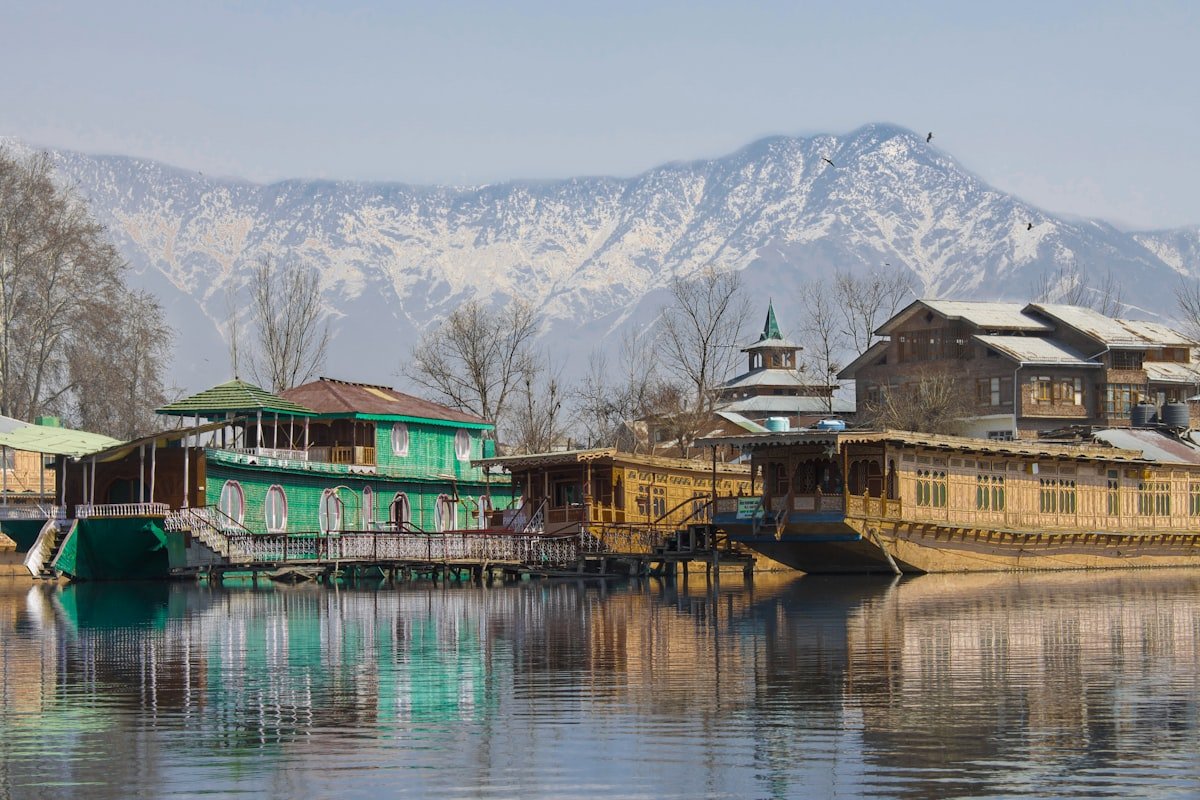

Apple Harvest Season Begins: Farmers Expect High Yield
Orchard owners across Kashmir are optimistic about a bumper apple crop this year due to favorable weather conditions and improved farming techniques.
Meet the local artisans who are working tirelessly to preserve and promote traditional Kashmiri arts like Pashmina weaving, Papier-mâché, and walnut wood carving.
The government has unveiled a comprehensive plan to upgrade the urban infrastructure in Srinagar, focusing on smart transport, waste management, and restoring heritage sites.
Gulmarg witnesses a record influx of tourists this winter season, bringing joy to local hoteliers and businesses. The recent heavy snowfall has turned the ski resort into a winter wonderland.
During the first three centuries of the Common Era, the Kushan Empire integrated Kashmir into a vast trans-Eurasian state connecting India, Central Asia, and the Mediterranean. This period brought significant urban expansion, architectural innovation at sites like Harwan and Kanispora, and the historic hosting of the Fourth Buddhist Council under Emperor Kanishka I.
Kalhana was a 12th-century Kashmiri Brahmin scholar who composed the Rajatarangini ('River of Kings') between 1148 and 1149 CE. As the son of Champaka, a former high official under King Harsha, Kalhana possessed firsthand insight into political administration and power dynamics. His chronicle stands as one of ancient India's few works of systematic historiography, combining critical cross-examination of inscriptions, coins, and charters with literary verse.
Kashmir's history is a remarkable chronicle of kingdoms, empires, and civilizations that flourished amidst the towering Himalayas. For over two thousand years, the valley has served as a strategic crossroads connecting the Indian subcontinent with Central Asia, Persia, and Tibet. Its rulers not only shaped political boundaries but also transformed Kashmir into a center of religion, scholarship, architecture, art, and commerce, leaving behind a legacy that continues to define the region today.
Discover the evidence-based history of Kashmir's rulers, from the Mauryan Empire and the Karkota Dynasty to the Kashmir Sultanate, Mughal, Afghan, Sikh, and Dogra rule. Explore the political, cultural, and architectural legacy that shaped one of the world's most historically significant Himalayan regions.
Local artisans are finding new global markets for their exquisite Pashmina shawls and intricate woodwork.
Beyond the popular destinations like Gulmarg and Pahalgam, discover the untouched beauty of Kashmir.
During the first three centuries of the Common Era, the Kushan Empire integrated Kashmir into a vast trans-Eurasian state connecting India, Central Asia, and the Mediterranean. This period brought significant urban expansion, architectural innovation at sites like Harwan and Kanispora, and the historic hosting of the Fourth Buddhist Council under Emperor Kanishka I.
Kalhana was a 12th-century Kashmiri Brahmin scholar who composed the Rajatarangini ('River of Kings') between 1148 and 1149 CE. As the son of Champaka, a former high official under King Harsha, Kalhana possessed firsthand insight into political administration and power dynamics. His chronicle stands as one of ancient India's few works of systematic historiography, combining critical cross-examination of inscriptions, coins, and charters with literary verse.
Kashmir's history is a remarkable chronicle of kingdoms, empires, and civilizations that flourished amidst the towering Himalayas. For over two thousand years, the valley has served as a strategic crossroads connecting the Indian subcontinent with Central Asia, Persia, and Tibet. Its rulers not only shaped political boundaries but also transformed Kashmir into a center of religion, scholarship, architecture, art, and commerce, leaving behind a legacy that continues to define the region today.
Discover the evidence-based history of Kashmir's rulers, from the Mauryan Empire and the Karkota Dynasty to the Kashmir Sultanate, Mughal, Afghan, Sikh, and Dogra rule. Explore the political, cultural, and architectural legacy that shaped one of the world's most historically significant Himalayan regions.
Orchard owners across Kashmir are optimistic about a bumper apple crop this year due to favorable weather conditions and improved farming techniques.
Meet the local artisans who are working tirelessly to preserve and promote traditional Kashmiri arts like Pashmina weaving, Papier-mâché, and walnut wood carving.
The government has unveiled a comprehensive plan to upgrade the urban infrastructure in Srinagar, focusing on smart transport, waste management, and restoring heritage sites.
Gulmarg witnesses a record influx of tourists this winter season, bringing joy to local hoteliers and businesses. The recent heavy snowfall has turned the ski resort into a winter wonderland.
A deep dive into the recent political shifts and what they mean for the local population and regional stability.
Beyond the popular destinations like Gulmarg and Pahalgam, discover the untouched beauty of Kashmir.
Local artisans are finding new global markets for their exquisite Pashmina shawls and intricate woodwork.